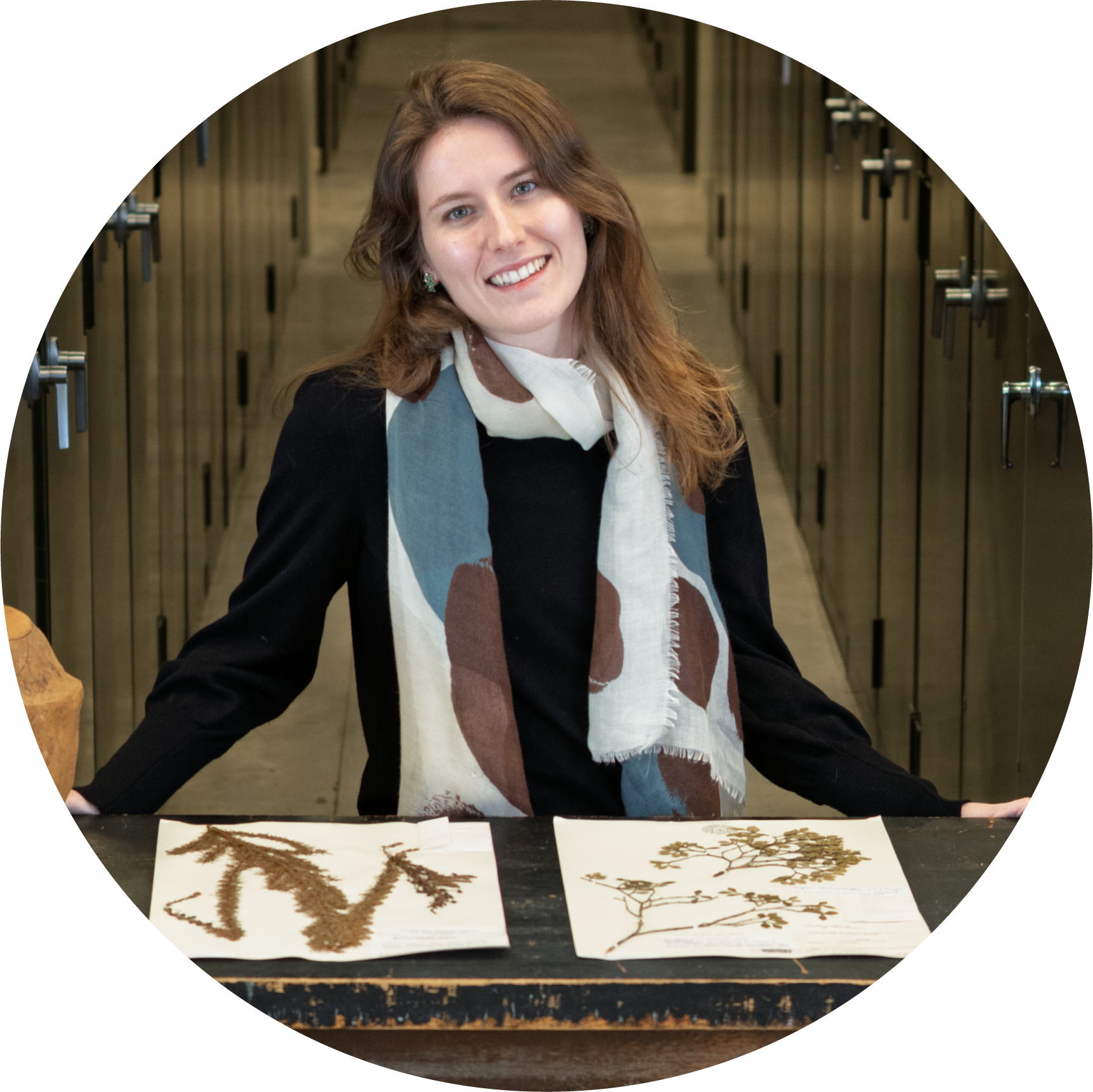
plant evolutionary biologist

"Discovery consists of seeing what everybody has seen and thinking what nobody has thought"

- Szent-Györgyi

About me

My name is Raquel C. Pizzardo and I am currently a PhD candidate at the Ecology and Evolutionary Biology department at the University of Michigan, USA.

Education

2022-present PhD in Ecology and Evolutionary Biology, University of Michigan, USA.

2021-2023 MSc. in Ecology and Evolutionary Biology, University of Michigan, USA.

2017-2021 BSc. in Biological Sciences, Universidade de São Paulo, SP, Brazil.

Research

Experience

Climatic change and naturally fragmented habitats. Advisor: Dr. Thais N. C. Vasconcelos

One of the greatest challenges in conservation sciences is to define areas of priority for efficient preservation of the biodiversity in face of growing anthropic pressure and forecasted climate changes. Due to the intimate relationship between organisms and their physical environment, areas of elevated species richness and endemism levels are particularly prone to biodiversity loss resulting from anthropogenic environmental damage. This can be particularly difficult when we consider naturally fragmented habitats, as the Espinhaço Range in the east of Brazil, a mountain chain with high values of both species richness and endemism.

To assess whether the distribution of species endemic of the chain regions will be affected differently by predicted scenarios of climate change, I performed species distribution models for different species that differ in their distribution. This approach corroborates previous studies suggesting that the endemic flora of the Espinhaço Range is under severe threat from climate change.

Risk assessment, evolutionary distinctiveness and “sky” island system. Advisor: Dr. Thais N. C. Vasconcelos; Co-advisor: Dr. Eimear NicLughadha

Global biodiversity is under extreme pressure as a consequence of human activity, being the decline in plant diversity particularly noticeable. Approaches that consider hot spots of biodiversity, as well as endemism areas, are commonly used to identify priority regions for conservation. However, although this is an effective method, conserving the evolutionary process is now also important, demanding new analysis that incorporates this feature. Mountain chains, “sky” island systems, had called attention for their impressive biodiversity, being the high numbers of species richness and endemism result from rapid and recent radiations. In this project, I am interested in evaluating the conservation of the evolutionary history of a particularly diverse environment in Brazil, the campo rupestre ecosystem, and the mountain chains associated with it.

To assess that, I performed the Evolutionary Distinct and Globally Endangered (EDGE) and phylogenetic diversity methods for the Chamaecrista ser. Coriaceae (Fabaceae) clade. With this approach, we are now able to understand the evolutionary history of this group and the challenges in applying conservation policies that link these factors in megadiverse environments.

My work has been supported by Fundação de Amparo à Pesquisa do Estado de São Paulo (FAPESP).

The role of assembly processes in shaping dominant tree communities in the Amazon rainforest. Advisor: Dr. Christopher Dick; Co-advisor: Dr. Stephen Smith

I am studying phylogenetic community structure in the Chrysophylloideae subfamily of Sapotaceae to understand local patterns of coevolution and coexistence. I aim to answer the following kinds of questions (1) How did clades of Chrysophylloideae assemble in the Neotropics?; (2) What are the roles of phylogenetic niche conservatism and niche divergence for the colonization of the Americas by a highly diverse and dominant rainforest lineage? (3) What is the level of genomic and functional divergence across the Amazon basin?; (4) What is the role of plant-insect interactions in defining biotic niche differences among locally coexisting species? This work will entail phylogenetic and biochemical analyses. My main goal is to explore the drivers of the diversification of a dominant Amazonian tree family considering different assembly processes and their consequences to the current community structure observed.

Publications

Please email me if you would like access to pdf versions.

7 Pizzardo RC, Charboneau JLM, Smith S, Gonçalves DJP, Chanderbali AS, Soltis DE, Soltis PS, Dick CW (2026 in prep. – manuscript available upon request). Phylogeny and biogeography of Sapotaceae, a family of ecologically dominant tropical rainforest trees.

6 Antonelli A, [...] Pizzardo RC, [...]. State of the World's Plants and Fungi (2026). London: Board of Trustees of the Royal Botanic Gardens, Kew, ii, 102 pp. Link

5 Scheidegger NB, Pizzardo RC, Vilela B, Bochorny T, Rando JG (2025). Assessing the Evolutionary Distinctiveness of a highly threatened plant group: the urgency to preserve a unique lineage of evolution in Brazil. Plants, People, Planet. Link

4 Pizzardo RC, NicLughadha E, Rando JG, Forest F, Walker B, Prochazka L, Nogueira A, Vasconcelos TNC (2024). An assessment of methods to combine evolutionary history and conservation: a study case in the Brazilian campo rupestre. Applications in Plant Sciences. Link

3 Prochazka L, Alcantara S, Rando JG, Vasconcelos TNC, Pizzardo RC, Nogueira A (2024). Resource Availability and Disturbance Frequency Shape Plant Life Forms in Neotropical Habitats. New Phytologist. Link

2 BFG – The Brazilian Flora Group, Pizzardo RC, et al. (2021). Flora of Brazil 2020. 1-28pp. Jardim Botânico do Rio de Janeiro, Rido de Janeiro.

1 Pizzardo RC, Vasconcelos TNC, Nogueira A, Prochazka L, Cota MMT, Rando JG (2021). Field Guide: Espinhaço Range and Chapada dos Veadeiros, BRAZIL - Chamaecrista ser. Coriaceae (Fabaceae) of campo rupestre. Field Museum.

Selected presentations

2026 "Boreotropical route and slow environmental niche evolution supports niche conservatism in the Neotropics for Chrysophylloideae (Sapotaceae)” (speaker). Botany 2026 (Tucson – AZ, USA)

2024 "Sapotaceae across time and space: a taxonomic and historical biogeographic perspective” (speaker). International Botanical Congress 2024 (Madrid - Spain)

2022 “Phylogenetic incongruence in an important tropical tree family, Sapotaceae, based on target sequence captured nuclear and plastome genes” (speaker). Botany 2022 (Anchorage – AK, USA).

2020 & 2021 “Conserving the evolutionary history of rapid and recent radiations: a study case with an endemic clade in the campo rupestre” (speaker). 28th USP International Symposium of Undergraduate Research (virtual).

2020 "Conserving the evolutionary history of rapid and recent radiations: a study case with Chamaecrista ser. Coriaceae (Fabaceae) in the campo rupestre" (video-poster). I Digital Symposium of Systematics and Evolution of Plants (virtual).

2019 “The challenge of tracing conservation policies in naturally fragmented habitats: the flora of the Espinhaço Range in a scenario of climate change” (poster & speaker). 70th Brazilian National Conference of Botany (Maceió – AL, Brazil).

2019 “The challenge of tracing conservation policies in naturally fragmented habitats: the flora of the Espinhaço Range in a scenario of climate change” (poster). 39th Regional Botany Meeting (MG, ES and BA; Diamantina - MG, Brazil).

Teaching & Outreach

Teaching Experience

2025 (winter term) Graduate Student Instructor in “Plant Biology” (University of Michigan, USA)

2023 (fall term) Graduate Student Instructor in “Evolution” (University of Michigan, USA)

2022 (fall term) Graduate Student Instructor in “Introductory Biology Lab” (University of Michigan, USA). Taught lab classes and support of students during extra class activities and studies.

2022 (winter term) Graduate Student Instructor in “Introductory Biology: Ecology and Evolution” (University of Michigan, USA). Taught discussion classes and support of students during extra class activities and studies.

2021 (fall term) Graduate Student Instructor in “Introductory Biology Lab” (University of Michigan, USA). Taught lab classes and support of students during extra class activities and studies.

2019 & 2020 (two semesters) Undergraduate Teach Assistant in “Diversity and Evolution of Photosynthetic Organisms” (Universidade de São Paulo, Brazil). Assisted in the preparation and presentation of practical classes and support of students during extra class activities and studies.

2018 Undergraduate Teach Assistant in “Genetics” (Universidade de São Paulo, Brazil). Assisted in the preparation of practical classes with Drosophila and support of students during extra class activities and studies.

Service and Outreach

2024 - present Peer reviewer for scientific journals.

2026 Pizzardo RC, Albornoz-Garzón JG. Scientist Spotlight: The Flooded Amazon Rainforest: A Drive-Through for Fishes. University of Michigan Museum of Natural History.

2020 “Brazil’s secret gardens”. Publication of a Science Story for the Kew Science website.

2019 Member of the organization team of “Bioblitz program: Counting Species Through Citizen Science”, organized at the Universidade de São Paulo, Brazil.

2018-2020 Conference organizer of 21th, 22th and 23th Semana Temática da Biologia.

Fieldwork

CV & Contact

Please feel free to reach me on my email: pizzardo@umich.edu

August 2026